
Notes from an Environmentalist.
Peepers, newts and snakes, harbingers of Spring. Easter.

Peeper Night
Easter
April 5th was another cold, wet night. Raindrops pattered quietly on the forest floor, as I waded into a wetlands area to witness a rite of renewal far older than that of our human based Easter.
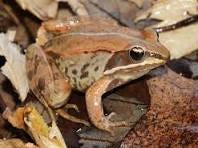
Beside me, a wood frog Rana sylvatica prepared to reenact a ritual that sent shivers down my spine, for it was on nights like these that our mutual ancestors first walked on land.
She dug her way out of her subnivean hibernaculum to join a slithery migration of amphibians hopping and crawling toward the cold, dark waters of a nearby vernal pond.
The route reversed the migration of our mutual ancestors, the tetrapod amphibians. Three hundred and fifty years ago the tetrapod amphibians crawled out of the water to escape the sharklike predators that terrorized the rivers and estuaries of the Devonian Age.
The ancient amphibians had already evolved limbs to help them clamber through aquatic vegetation but they found their limbs especially useful once they hauled out on land. It was a fern and lycopod forest, happily devoid of predators -- an amphibian Garden of Eden because flowering plants had yet to evolve -- but it was a world chock full of food, if your tastes ran toward cockroaches the size of small rats.
Like their ancestors, today’s amphibians -- frogs, newts and salamanders -- must return to water to lay their eggs. They prefer vernal ponds that only fill during spring rains, because the temporary ponds harbor fewer predators.
As the female enters the pond, she has to swim through a gauntlet of lascivious male amphibians. The spotted salamanders have already placed packets of sperm on the underwater vegetation. The female salamanders will pick up the packets and tuck them into their cloacae for future insemination.
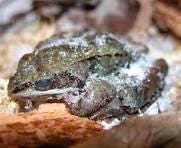
The female frog is not so lucky. She has to make her way through a deafening stag-line of peeping, bellowing, quacking males. The spring peepers make the most noise but to the female, wood frogs have the sweeter calls. The males sound like a flock of tiny feeding ducks, the diminutive tree frogs, like broken guitar strings.
A male courts the female with a tentative foreclaw. She kicks him away. Another male approaches. She let this suitor mount. Together the two struggle toward a patch of pondweed. She clasps the weed and exudes her eggs while the male fertilizes them one by one.
Hundreds of other frogs are doing the same thing. By midnight most of them will have left the pond and returned to the forest. But they will repeat the process many more nights as the temperatures fluctuate above and below freezing.
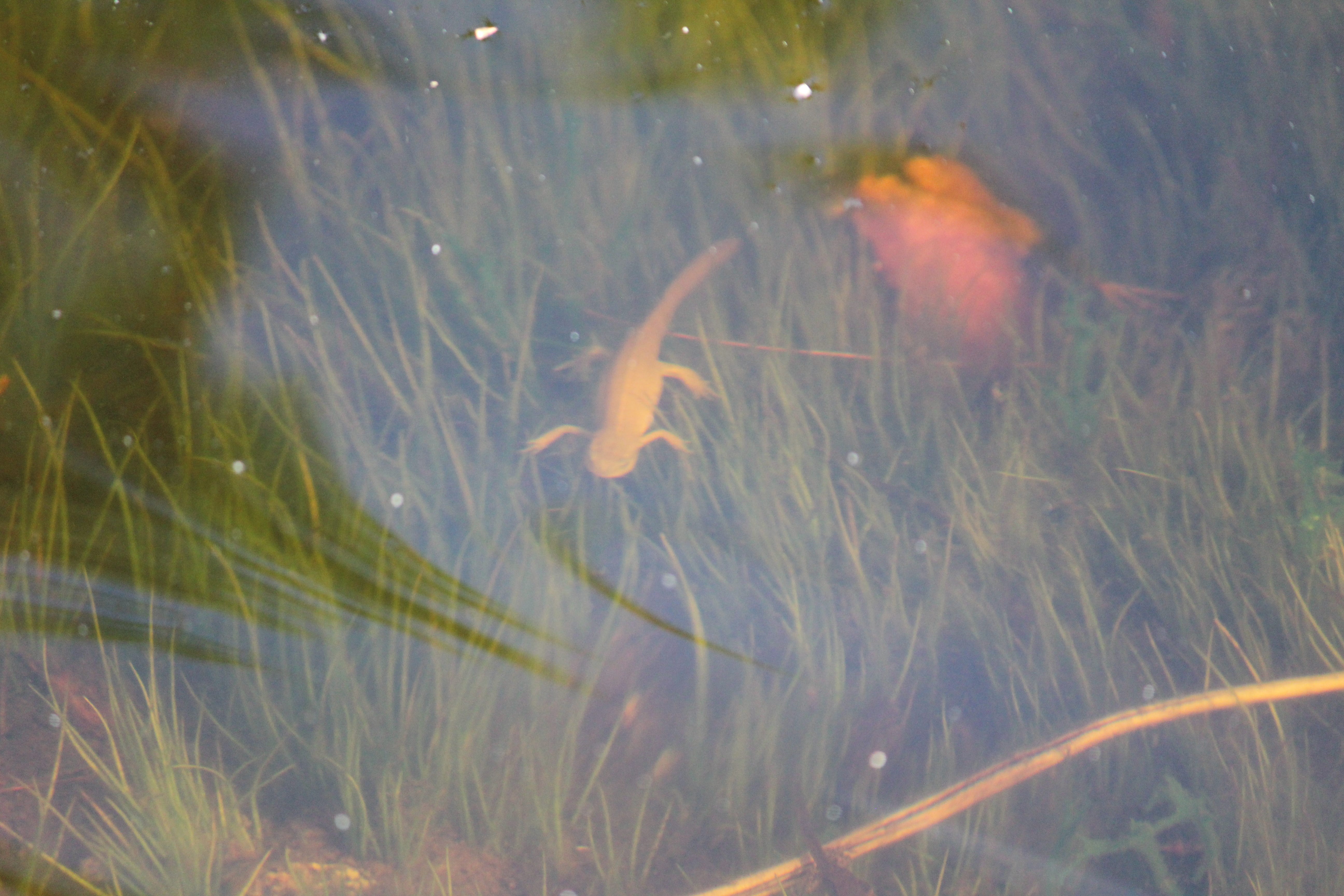
But the frog has left her eggs in the pond oblivious to the presence of a red-spotted newt. It has done the frogs one better. It started as an egg, hatched as a gill- breathing larva, metamorphosed into a land-living eft, then metamorphosed again into a swimming three year old adult -- lean adult now intent on raiding the eggs of other amphibians while preparing to lay her own.
The newt will be able to wrestle a few frog eggs out of their gelatinous coating. But most will survive to become full-fledged frogs by mid-summer. Not so the tadpoles of the bullfrogs in the adjacent pond. They can take up to three years to metamorphose.
But, for now these peepers, or tinklepinks as they are called on the Vineyard, where humans and amphibians all like to talk a little differently from mainlanders, are just about everyone’s favorite harbinger of spring. But I prefer creatures just a bit up the twiggy tree of life. They are the garter snakes who sun themselves on our granite footsteps to the consternation of visiting workmen and guests.
One year I took the top off our compost bin and interrupted three mating garter snakes, a reptilian menage a trois, if you will. I’m not sure who was more non-plussed, me or the interrupted snakes who glowered at me with beady black eyes as they slithered back down into the steaming compost, so much like our planet’s ancient Devonian jungles.
####
Bill Sargent is the author of 27 books about science, the environment and Ipswich. He posts Notes from an Environmentalist, daily on WilliamSargent@substack.com, and leads Mass Audubon beach walks on Plum Island.